Related

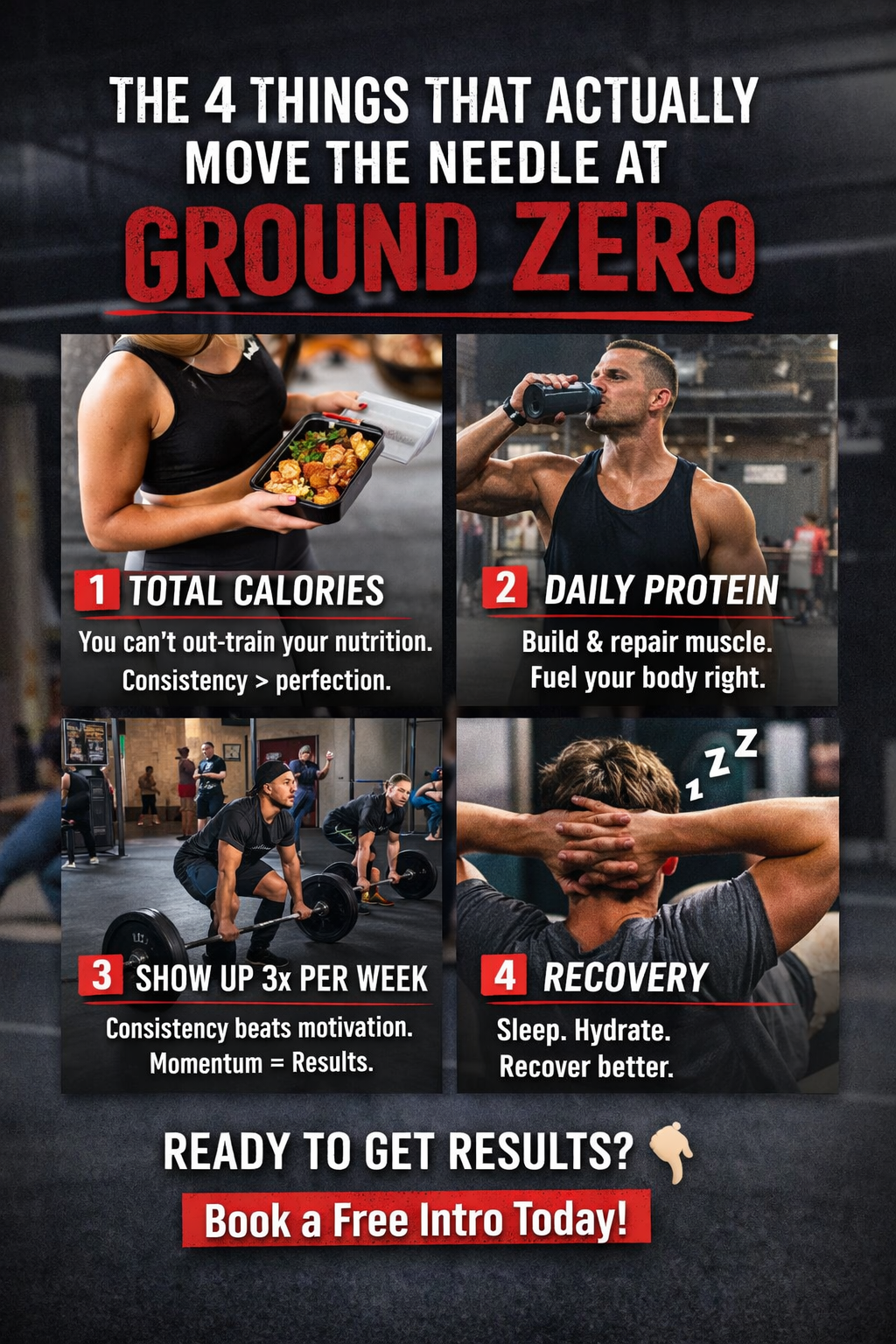
You Can't Outrun the Drive Thru
Let's have an honest conversation. You showed up to class today. You hit every rep, you sweated through your shirt, you high fived your buddies on the whiteboard time. You feel like a million bucks.
Then you go home and eat like you just finished an Ironman.
I hate to be the one to tell you this, but that hour in the gym is not the magic eraser you think it is. Let's break down the actual math so you can see why.
Your body burns calories all day, not just during class. This total is called your TDEE, or Total Daily Energy Expenditure. It's made up of your basal metabolic rate, which is the energy your body burns just existing, breathing, and pumping blood, plus digestion, daily movement like walking and chores, and finally exercise. Here's the part that surprises people. For most of us, that last piece, actual planned exercise, only makes up somewhere around 5 to 10 percent of our total daily burn. Your body is working hard all day just to keep the lights on. Your one hour workout is a small slice of a much bigger pie.
Now layer in the food side. A 150 pound person running a full mile burns roughly 100 to 115 calories. A typical fast food combo meal can run 800 to 1,200 calories depending what you order. Do the math and you'd need to run somewhere between 7 and 10 miles just to break even on one meal. Most people aren't logging double digit miles after leg day.
Here's the equation that actually drives fat loss, and it's simpler than people want it to be. It's called energy balance. Calories in versus calories out. Eat less than your TDEE consistently and you lose weight. Eat more than it and you gain, no matter how many burpees you did that morning. This isn't opinion, it's basic thermodynamics, and it's why the phrase "you can't out train a bad diet" has stuck around for decades. It's true.
Prefer something simpler? Skip the formula and use this rule of thumb instead. Take your body weight in pounds and multiply it.
- Fat loss: bodyweight x 12 to 14
- Maintenance: bodyweight x 15 to 16
- Muscle gain: bodyweight x 17 to 18
So a 180 pound athlete looking to lean out would land somewhere around 2,160 to 2,520 calories a day. That's it. No calculator, no kilograms, just your weight and a multiplier. It's less precise than the BMR formula below, but it gets most people close enough to start, especially if you're already fairly active. Track your weight for two weeks at that number and adjust from there. If the scale isn't budging, drop it by 100 to 200 calories and reassess.
If you want more precision, especially if you're a harder case like a competitive athlete or someone who's plateaued, here's the longer version.
Step 1: Find your basal metabolic rate, or BMR. This is what your body burns at total rest. The Mifflin-St Jeor equation is the gold standard and it looks like this.
Men: BMR = (10 x weight in kg) + (6.25 x height in cm) - (5 x age) + 5
Women: BMR = (10 x weight in kg) + (6.25 x height in cm) - (5 x age) - 161
Step 2: Multiply your BMR by an activity factor to get your TDEE.
- Sedentary, little to no exercise: BMR x 1.2
- Lightly active, workouts 1 to 3 days a week: BMR x 1.375
- Moderately active, workouts 3 to 5 days a week: BMR x 1.55
- Very active, hard training 6 to 7 days a week: BMR x 1.725
- Athlete, physical job plus daily training: BMR x 1.9
That final number is roughly how many calories you burn in a day, including your workouts. From there it's simple math. Eat below that number consistently and you're in a deficit, which drives fat loss. Eat at that number and you maintain. Eat above it and you're building, whether that's muscle or extra body fat depending on how clean the surplus is.
One catch for our athletes and BJJ competitors. These formulas are estimates, not gospel. Someone training two hours a day at the gym plus rolling on the mats needs a real activity multiplier, not the sedentary desk job number. This is exactly why we like getting actual data through tracking instead of guessing. The formula gets you in the ballpark, tracking your weight and intake over a couple weeks tells you if the ballpark is right.
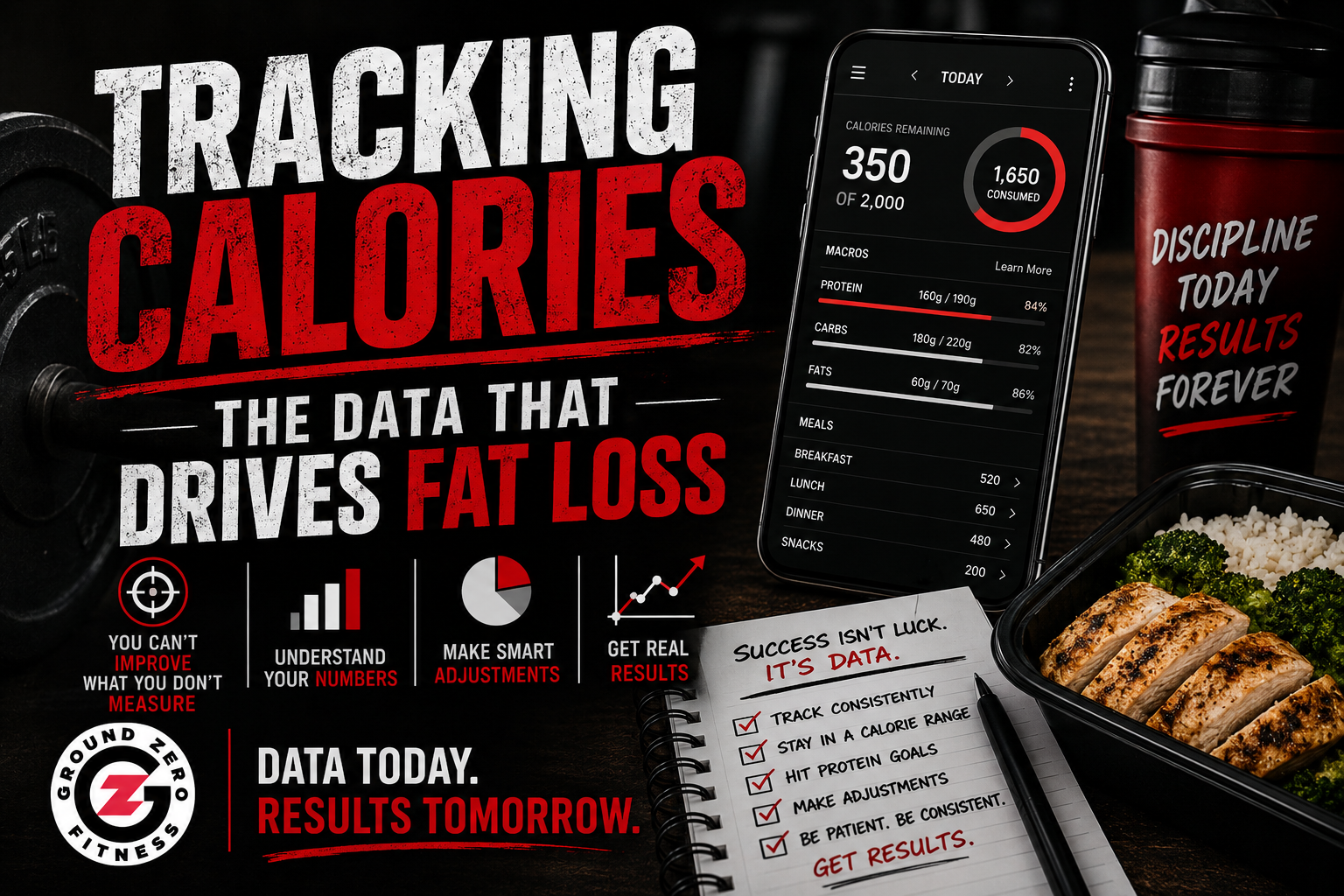
So why do we hammer tracking so hard at Ground Zero? Because research consistently shows people underestimate what they eat and overestimate what they burn, sometimes by a wide margin. You genuinely cannot manage what you don't measure. Tracking for even a couple weeks gives you real data instead of guesses, and that data is what actually moves the needle.
Keep showing up to class. That's where you build strength, conditioning, and the community that keeps you consistent. But if your results have stalled, the answer usually isn't a harder workout. It's a closer look at your plate.
Want help figuring out your numbers and building a plan that fits your actual life? Book our Free No Sweat Intro and let's map out a real strategy together.
👉✅https://api.grow.pushpress.com/widget/bookings/gz-fitness-nsi




.png)






















.png)






.png)
.png)




.png)
.png)

.png)

.png)














-2.png)
.png)


