Related

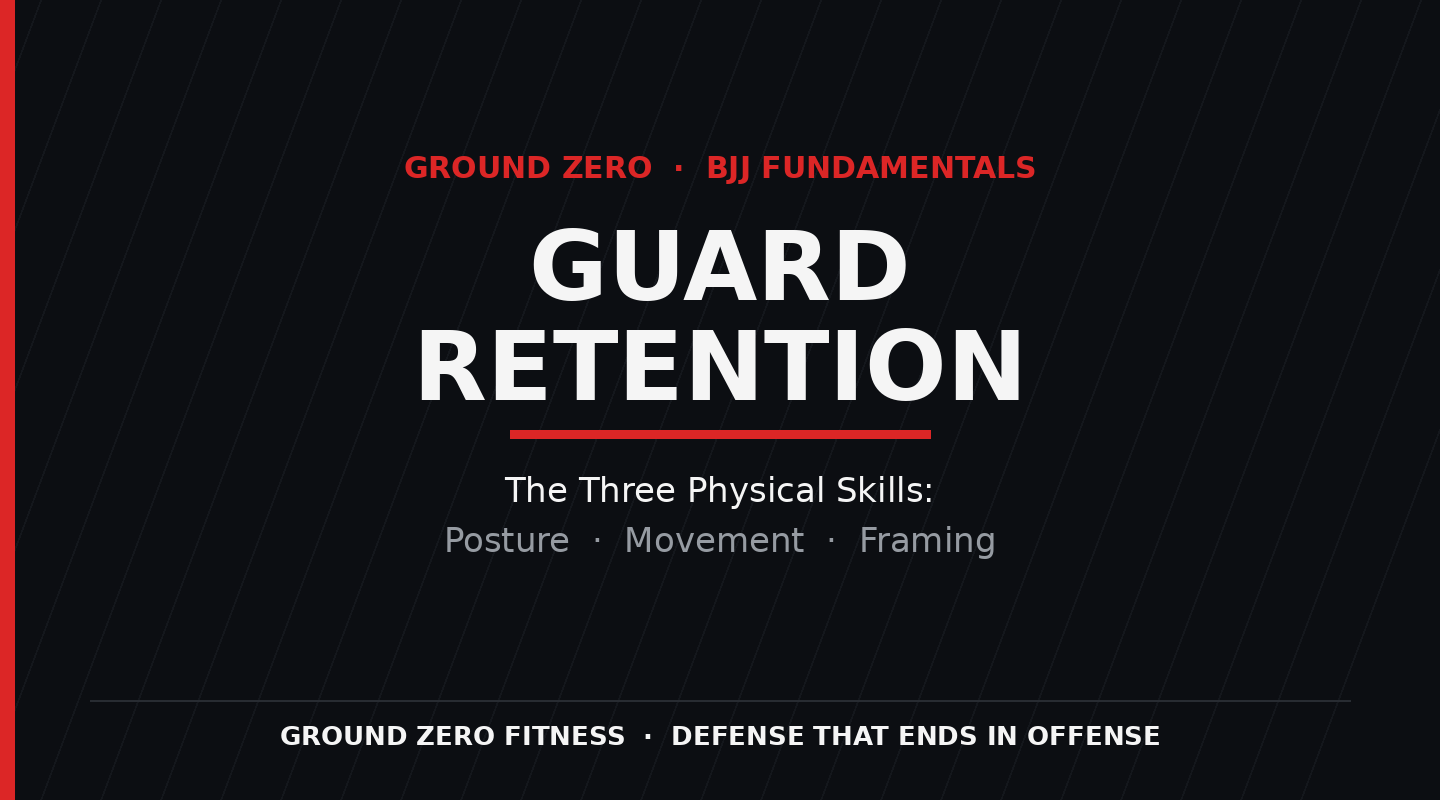
The Three Physical Skills of Guard Retention
Guard retention is defense. That's the first thing to understand before we get into the how. When someone is passing your guard, you are on the back foot. Your job in that moment is not to stay comfortable defending, it's to survive the pass attempt and get back to offense. Retention is the bridge that takes you from a defensive scramble back to attacking. We always want to end in offense.
So when we train guard retention, we're not training to play turtle and hope. We're training the skills that buy us the time and space to recover position and threaten again. There are three physical skills that make this possible, and they should be drilled daily.
1. Posture
Posture is your shape. Whether you're seated, supine (on your back), or in turtle, the principle is the same: your knees stay to your chest and your elbows stay to your knees. That tight, compact frame is what protects your hips and keeps the passer from controlling your structure.
When your knees and elbows connect, you eliminate the gaps a good passer wants to exploit. You can shift between seated, supine, and turtle as the situation demands, but the connection between knees and elbows is the constant. Lose that connection and you give your opponent the room to flatten you out and complete the pass.
2. Movement
A good shape is useless if you can't move. Retention lives in your ability to keep changing angles and resetting distance faster than your opponent can close it down.
The good news is you're already drilling these movements every class. The shrimp, the step over, the hip heist. These aren't just warm-up filler. They are the exact tools you use to keep your hips away from danger and to create the angle you need to re-guard. Treat your warm-ups like skill practice, because that's what they are. Every shrimp you do with intention is a rep that shows up when someone is trying to pass.
3. The Ability to Frame
The third skill is framing, and it's what you reach for when your opponent tries to establish a chest-to-chest position. That's the moment the pass is closing in, and a good frame is what buys time.
Use your hand, forearm, or backhand to create that frame. Those frames keep your opponent's chest off yours, and as long as their chest can't connect to yours, the pass isn't finished. Framing buys you the half-second you need to bring your movement and posture back online and recover.
Put It Together
Posture, movement, and framing aren't three separate things, they work as one system. Your posture gives you the shape, your movement keeps you ahead of the pass, and your frames stop your opponent from connecting and finishing. Drill all three daily and your guard retention stops being a desperate scramble and becomes a reliable path back to offense.
Remember the goal. Retention is defense, but defense is never the destination. We retain to recover, and we recover to attack. Always end in offense.
Train It With Us
We're building out the entire guard retention system through the months of June and July. If you want to drill these three skills the right way, with coaching, structure, and reps that actually transfer to live rolling, now is the time to get on the mat with us.
Book your intro here: https://api.grow.pushpress.com/widget/bookings/gz-fitness-nsi

.png)









.png)



.png)
.png)
.png)
.png)
.png)

.png)





-2.png)
.png)


