Related

There Is No Shortcut: Why the "Easy Way" Is the Most Expensive Route You Can Take
Nobody walks into a gym hoping it'll take three years.
They walk in hoping it'll take six weeks. They've seen the ad: the 21 day shred, the four week challenge, the supplement that "unlocks" fat loss, the program that promises a 50 pound deadlift jump without changing anything else about how they live. The pitch is always the same. Fast, easy, and safe. Pick all three.
Here's the problem. Fast, easy, and risk free is not a description of progress. It's a description of a sales page.
Real progress is slow enough that you'll question it, hard enough that you'll want to quit, and uncertain enough that you'll have to make adjustments along the way. That's not a warning. That's just the job.
Why the Easy Route Sells So Well
The easy route sells because it's honest about one thing: change is uncomfortable, and most people would rather not be uncomfortable.
So the market gives people what they're asking for. Cut calories to nothing and the scale drops fast. Skip the mechanics and load the bar heavy on day one and the numbers look good on Instagram. Buy the powder, do the cleanse, follow the 30 day plan you found on a reel from someone you've never met.
And for a few weeks, it works. That's the trap. The easy route almost always produces a short term result. If it didn't, nobody would buy it twice.
What Actually Happens Next
Here's what we see over and over from people who come to us after trying to speed run the process:
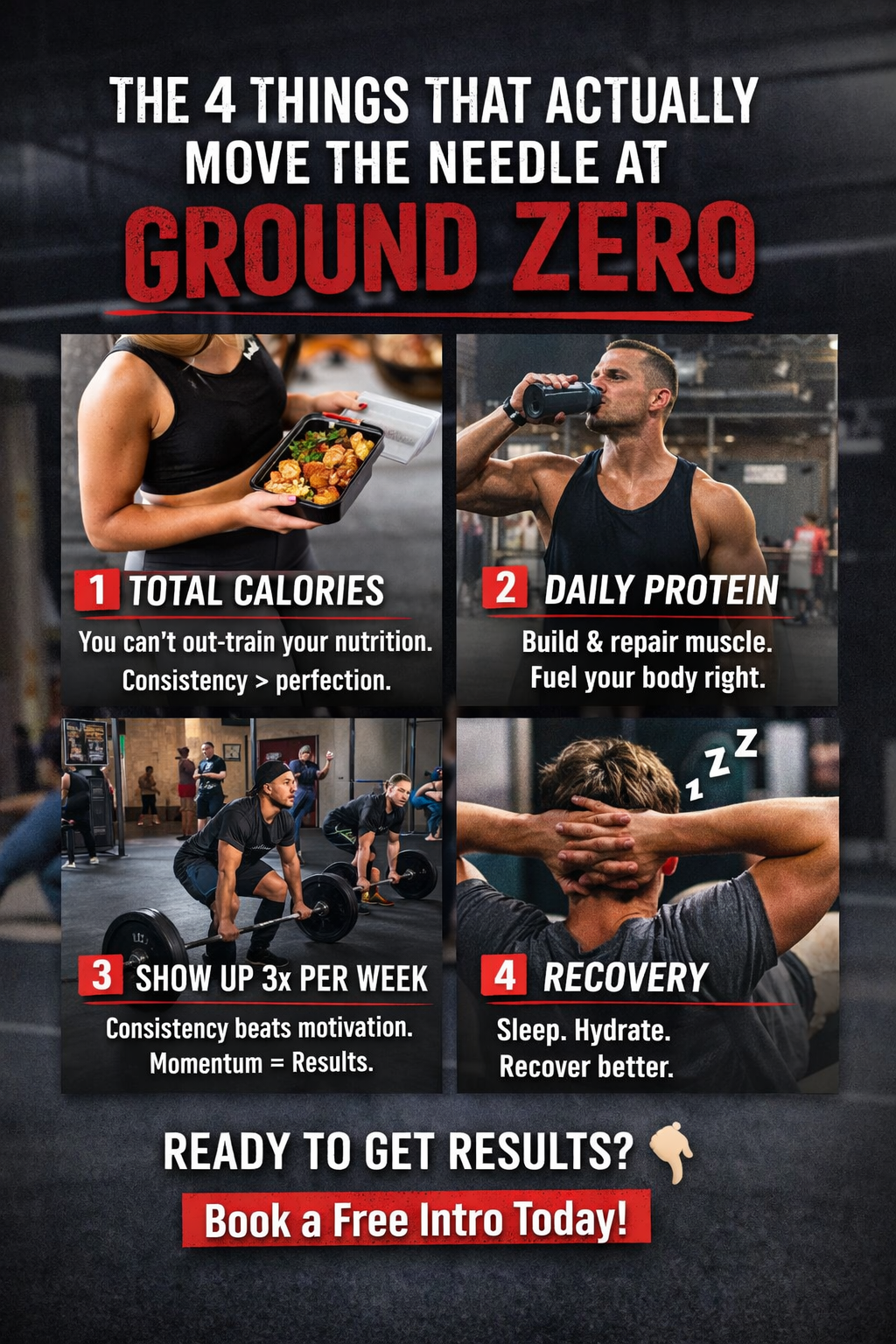
They lose weight they can't keep off. Aggressive restriction is not a skill. When the 30 days end, there's no habit underneath it. Just a person who's hungry, tired, and about to gain it all back plus a little extra.
They get hurt. Not always dramatically. Usually it's a nagging shoulder, a low back that's been "off" for a month, a knee that only hurts on stairs. Loading a movement you haven't earned yet is the single fastest way to buy yourself a six week detour.
They quit, and then they wait. This is the real cost. After the second or third failed attempt, people stop believing the problem is the program. They start believing the problem is them. So they wait. Six months. Two years. And every year they wait, the starting line moves a little further back: less muscle, worse mobility, more weight to move, more medications on the counter.
That's the part nobody puts on the sales page. Chasing the easy route doesn't just fail to make your life easier. It reliably makes it harder. The person who spent three years cycling through quick fixes is in a worse position than the person who spent those same three years making unglamorous, boring, consistent progress.
Slow Is Actually Fast
Run the math honestly.
A person who loses a half pound a week and keeps it off is down 25 pounds in a year, and still down 25 pounds in year three, because they built the habits that hold it.
A person chasing 10 pounds a month loses 20, gains back 25, tries again in the spring, quits in June, and starts over in January. Three years later they're heavier than when they started and convinced they can't do it.
Same three years. Wildly different lives.
The same is true for strength. The lifter who spends eight weeks earning a clean squat pattern before adding real load will out lift the person who skipped it. Not in month two, but in year two, and every year after that. Mechanics first isn't a slower path to strength. It's the only path that doesn't dead end.
And No, You Can't Remove the Risk
Let's be straight about this part too. There is no version of this where nothing goes wrong.
You will have a week where the scale doesn't move. You'll tweak something. You'll travel, get sick, have a stretch of bad sleep, hit a plateau that lasts longer than you think is fair. Life will get in the way, because life always does.
The goal was never to eliminate risk. The goal is to manage it, to build a plan that bends instead of breaks when something goes sideways. That's the actual difference between someone who's still training in ten years and someone who isn't.
This Is What a Coach Is For
Most people don't fail because they lack discipline. They fail because they're guessing about where to start, what to prioritize, how much is enough, and what to do when the plan meets reality.
A good coach solves three problems:
Getting started correctly. Meeting you where you actually are, not where a generic program assumes you are. That means honest assessment of your movement, your schedule, your history, your injuries, and a starting point that matches.
Building habits, not just workouts. The workout is the easy part. The hard part is the eating, the sleeping, the showing up on the week you don't feel like it. Habits are what carry results past the end of a program, and habits are built deliberately, one at a time, with someone holding you to them.
Adjusting when things break. When you tweak your back, travel for two weeks, or stall out for a month, you don't need a new program off the internet. You need someone who knows your history to make the next call.
You can technically do all of this alone. Most people don't. That's not a character flaw. It's just what the data on this looks like.
Why Ground Zero Fitness
We built Ground Zero around exactly this problem.
Our approach is mechanics first and longevity oriented, designed specifically for adults who want to be strong, capable, and healthy for the next thirty years, not shredded for the next thirty days. We coach movement before we coach load. We build nutrition habits you can actually keep instead of handing you a meal plan you'll abandon by Thursday. And if self defense is part of your goal, Ground Zero Fighting Systems brings a jiu jitsu program rooted in three decades of experience in West Virginia.
What we won't do is promise you it'll be fast, easy, or risk free. Anyone telling you that is selling you the version of this that has already failed you before.
What we will do is give you a real starting point, a real plan, and real coaching, and then hold you to it long enough for it to work.
Start Where You Actually Are
You don't need to be in shape to start. You don't need to have your nutrition figured out. You don't need to have any idea what you're doing.
You need to start, and you need someone in your corner who's done this before.
Book a free intro with us. We'll sit down, talk through your goals and your history, and build you an honest plan. No pressure, no gimmicks, no 21 day promises.
Book your intro here: https://api.grow.pushpress.com/widget/bookings/gz-fitness-nsi
.png)











.png)




.png)
.png)



.png)
.png)
.png)

.png)










-2.png)
.png)


-8.png)