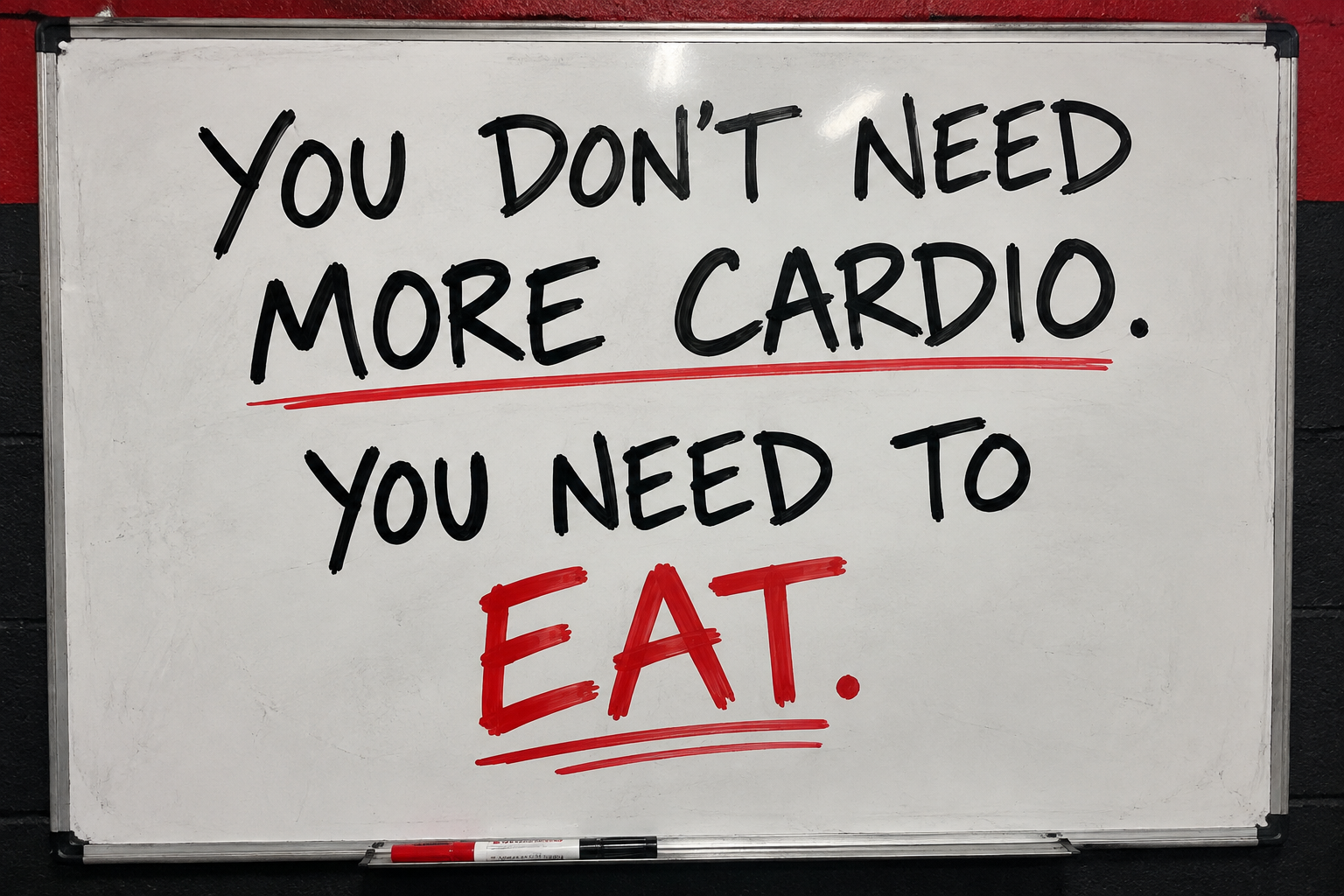
Every year we get people walking through the door of Ground Zero wanting a transformation. Six weeks, a wedding, a reunion, a number on the scale they've been chasing for years. And almost every time, the plan they walk in with is the same one that hasn't worked before: more time in the gym, more cardio, fewer calories, grind harder. We get it. It feels productive. But it's not what actually changes your body. The real first step to a transformation that holds up over six weeks and beyond isn't about minutes on a treadmill or classes crammed into a week. It's about how you fuel yourself. The 1,200 calorie diet lied to you A lot of people have tried the classic ultra low calorie approach. And it does work, at first. You'll drop weight fast the first week or two. But what's actually leaving your body isn't fat, it's inflammation and water weight, the first stuff to go no matter what you do. The problem is that story stops there. When you don't feed your body enough while you're still training hard or living an active life, it doesn't just calmly burn fat. It holds onto fat and water instead, treating food as scarce, and starts pulling energy from muscle. This is well documented: even moderate, sustained calorie restriction consistently produces some loss of lean mass alongside fat loss, not just in extreme diets (Kistler et al., 2017; Weinheimer et al., 2010). Why the scale says one thing and the mirror says another Someone hits their goal weight but doesn't look the way they pictured, doesn't feel strong, looks softer than the number suggests. That's muscle loss showing up, usually because protein wasn't where it needed to be. Research consistently shows low protein intake during a deficit is tied to greater muscle loss, while higher intake helps protect it (Longland et al., 2016; ISSN Position Stand, 2017). Muscle keeps you strong and keeps your metabolism working for you. Losing it isn't a side effect to ignore, it's the story going sideways. So what actually works Turning your body into something that burns fat efficiently isn't about starving it. It's fueling it enough to do its job: Enough protein to protect and build muscle, generally in the range of 1.2 to 2.0 grams per kilogram of bodyweight for active people (ISSN Position Stand, 2017) Enough carbs to support training and daily life, not just survive a workout A calorie level that creates change without triggering muscle loss Before we talk programming or training days, we talk about eating. None of the work in here matters if your body doesn't have what it needs to use it. Six weeks is enough time to change how you look and feel, but only if the fuel is right. That's the Ground Zero approach. Fuel first. Everything else builds from there.