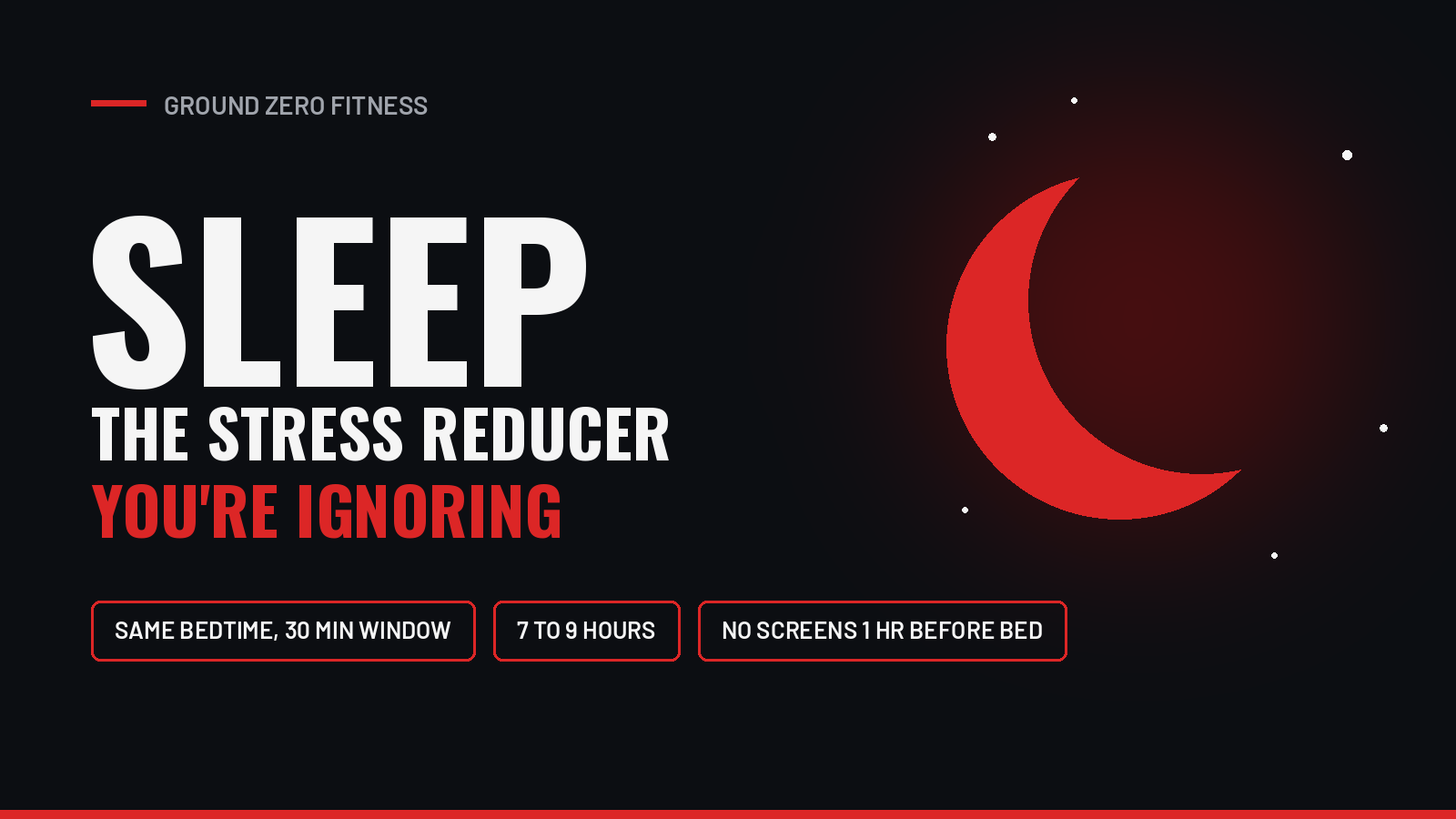
You train hard. You eat well most days. But if you're still walking around wound tight, irritable, and running on caffeine by 2 p.m., the problem might not be your workout or your diet. It might be your sleep. Sleep is when your body clears out the stress of the day. Your nervous system resets, cortisol levels drop, and your brain processes everything you took in. Shortchange that process and you start the next day already behind, carrying yesterday's stress on top of today's. Stack a few bad nights together and that load keeps growing. The good news? Fixing it doesn't require a supplement or a gadget. It requires three simple habits. 1. Go to bed within 30 minutes of the same time every night. Your body runs on a clock. When bedtime bounces around from 10 p.m. one night to 1 a.m. the next, that clock never settles, and your stress hormones stay out of rhythm. Pick a bedtime and stay within a 30 minute window of it, weekends included. Consistency tells your body when to wind down and when to wake up ready. 2. Get 7 to 9 hours of sleep. Not 5. Not "I'll catch up Saturday." Adults need 7 to 9 hours for full recovery. Less than that and you're more reactive, less patient, and more likely to feel overwhelmed by things you'd normally handle with ease. Work backward from your wake up time and protect that window like you would a training session. 3. No screens within 1 hour of bedtime. Your phone keeps your brain switched on. The light, the notifications, the endless scroll: all of it signals "stay alert" right when you should be powering down. Put the phone on the charger across the room an hour before bed. Read, stretch, talk with your family, or simply sit still. Give your mind a chance to slow down before your head hits the pillow. What changes when you get this right When these three habits become your routine, the difference is drastic. You wake up clearer. Small problems stay small. Your patience with your kids, your coworkers, and yourself goes up. Your training improves, your cravings calm down, and that constant background tension you've accepted as normal starts to fade. You stop carrying stress from one day into the next because you finally give your body the time it needs to let it go. Need help putting it all together? Sleep, training, and nutrition all work together, and sometimes it helps to have a coach in your corner. If you're ready to feel better and handle stress with more confidence, book a free intro with our team: https://wodify.link/GZNSI
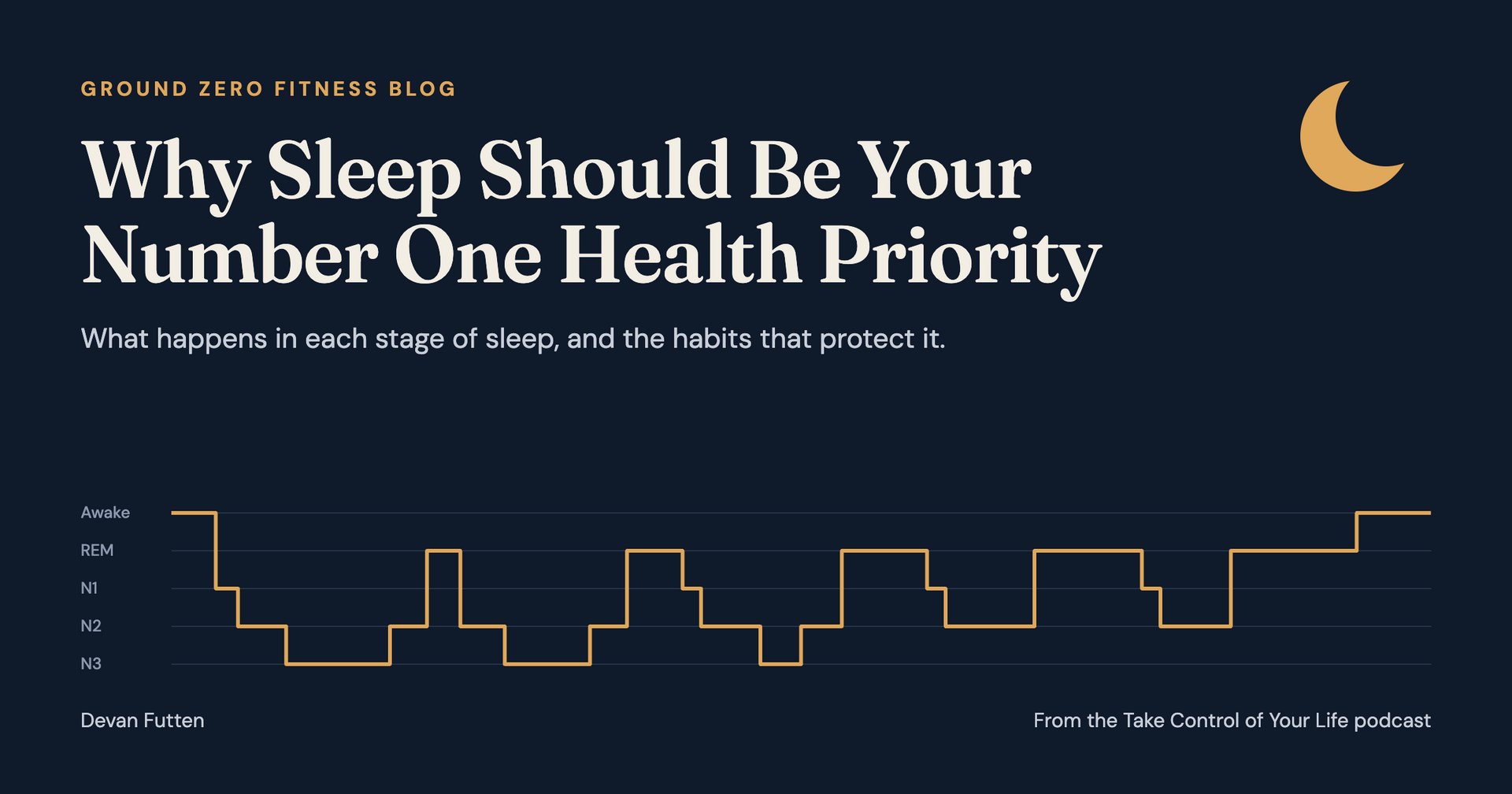
If you want to improve your health, your mood, and how well you age, start with the one thing you do every single night: sleep. In this post, I'm covering why sleep matters so much, what's actually happening in your body while you're out, and the habits I've built to make my own sleep as good as it can be. Quick note on sources: most of the science here comes from Andrew Huberman's book Protocols. Huberman is a Stanford neuroscientist and host of the Huberman Lab podcast, and he does a great job simplifying this stuff. My goal is to make it even easier to digest. What Happens When You Sleep Sleep runs in cycles of roughly 90 minutes. Most of us move through three to five of these cycles each night, depending on when we go to bed and when we wake up. Each cycle has four stages. Stage 1 (N1): Light Sleep This first stage lasts about five to ten minutes. It's the transition out of wakefulness, and it's where your body starts shifting into repair mode. Your cells rely on ATP (adenosine triphosphate) as their energy source for everything from muscle contraction to cell repair to brain function, and sleep is when your body gets to restore those systems. Side note: your body uses creatine to help regenerate ATP, which is one reason creatine is one of the most researched supplements out there. If you want to talk about whether it makes sense for you, reach out to me or Coach Carlos. Stage 2 (N2): Deeper Light Sleep N2 lasts about 20 minutes. Your core body temperature drops and your heart rate slows. Your brain also starts producing something called sleep spindles, bursts of activity that help consolidate what you learned in the days before. This is a big part of how your brain turns experiences into lasting memories. Here's the key: you don't just make sleep spindles once in the first cycle and call it good. They show up across every cycle, so the more full cycles you get, the more memory consolidation happens. Stage 3 (N3): Deep Sleep Also called slow wave sleep, this is where the heavy repair work happens. Your heart rate slows even further, and your pituitary gland releases growth hormone into your bloodstream. That kicks off active repair of your muscles, brain, tendons, skin, heart, and other tissues broken down during the day. Deep sleep is also when your brain cleans house. Through what's called glymphatic clearance, fluid flushes through the brain and clears out waste and byproducts. It's one of the most important ways your brain takes care of itself. Stage 4: REM Sleep REM (rapid eye movement) is the stage most people have heard of. During REM, your brain strengthens the neural connections you need and prunes the ones you don't. REM is also where your brain processes emotion. People who are deprived of REM sleep have a harder time unloading the emotional weight of past experiences, including trauma. Over time, a lack of REM can contribute to higher levels of anxiety and depression. The Cost of Poor Sleep The long term stakes are real. One study Huberman references found that every 1% reduction in REM sleep was associated with roughly a 9% increase in dementia risk. These numbers are general and there are always outliers, but the point stands: how you sleep today shapes how your brain works 20, 30, and 40 years from now. Poor sleep is also linked to higher overall mortality risk, and a huge share of Americans aren't getting enough of it. Huberman's general recommendations: Ages 6 to 12: about 9 hours Ages 13 to 18: about 8 hours Adults: 7 to 9 hours, depending on the individual This is just my opinion, but when we look at how many people are struggling with anxiety and depression right now, one of the first questions we should be asking is: how's your sleep? Are you on your phone late at night and missing out on the deep sleep and REM your brain needs to process the day? It won't fix everything, but it's a great place to start. How I've Improved My Sleep I like to test things on myself before I recommend them to you, so here's what I've been doing. And yes, I know what some of you are thinking: "Must be nice to go to bed at 9:00, Devan." I get it. I have two three year old girls who want to wrestle at 9:00 at night. But our bedtime is 9:00, and that's when we go to bed. Once you understand that sleep drives your recovery, your cell repair, and your emotional health, it becomes a priority you protect, not something you squeeze in. I go to bed at 9:00 and usually wake up between 4:30 and 5:00. Here's how I make that happen. 1. I "brick" my phone at night This is the hardest one for most people, and it's the one that's made the biggest difference for me. My personal weakness is getting stuck on YouTube watching longevity videos, which I realize is a little ironic. I use an app called Brick. They send you a physical 3D printed brick that you scan to lock or unlock your phone. At 8:05 PM, my phone locks down every app except calls and texts until 6:00 AM. To override it, I'd have to scan the brick, and I've hidden that deep in a filing cabinet. So at 8:00, my phone goes on the counter and I have zero desire to pick it up, because there's nothing to do on it. Whatever tool you use, find a way to block distracting apps in the evening. 2. I wear blue and green light blocking glasses In the evening, I wear red tinted lenses that filter out blue and green wavelengths of light. Those wavelengths signal your brain that it's daytime, so cutting them out makes it easier to fall asleep. 3. Bedtime is non negotiable We're in bed at 9:00. No exceptions. More Habits That Support Great Sleep Keep a consistent bedtime. Going to bed within the same 30 minute window every night is huge. Cut bright light in the hour before bed. Dim the lights in your house, put your phone in red light mode, and avoid blue and green light as bedtime approaches. Get bright light early. View sunlight, or use a 10,000 lux light (you can find these on Amazon) within 60 minutes of waking. This triggers a healthy early cortisol rise, which helps you feel alert in the morning and lets cortisol fall later in the day so your body is ready for sleep. Cut caffeine 8 to 10 hours before bed. Throughout the day, a chemical called adenosine builds up in your brain. That's what makes you feel tired. Caffeine doesn't actually give you energy; it blocks adenosine's receptors so your brain can't tell how tired you are. Meanwhile, adenosine keeps building. When the caffeine wears off, all that built up fatigue hits at once. That's the afternoon crash. Caffeine also lingers in your system for hours, so a late cup can quietly wreck your sleep quality even if you fall asleep fine. I love coffee, so this one was hard, but I don't drink caffeine past noon anymore. I've also cut out energy drinks completely because that much caffeine just isn't necessary. I know we carry them at the gym, and you're welcome to keep drinking them, but it wouldn't hurt my feelings if nobody did. The Bottom Line Prioritize your sleep, and every other part of your life will improve. Try these habits for two weeks. I'm confident you'll feel the difference.
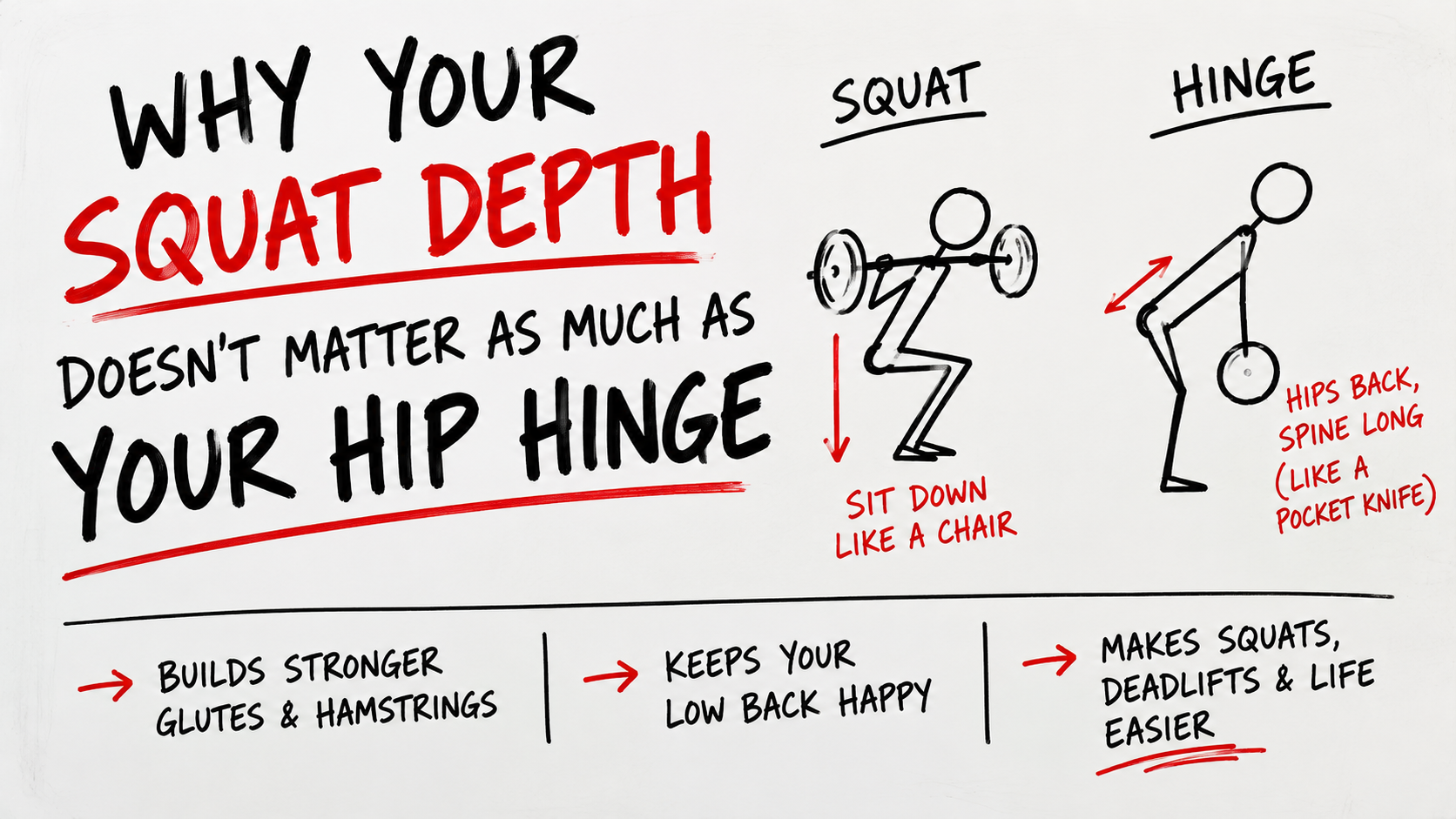
If you've been in one of our classes more than a few times, you've probably heard one of us yell "hinge!" at you mid set. Maybe it was during deadlifts. Maybe kettlebell swings. Honestly, it might've just been while you were bending over to grab your water bottle between sets. We're not trying to nitpick. There's a real reason we harp on this one thing so much. Out of everything we coach, the hip hinge might be the most important pattern you'll ever own, and almost nobody walks in the door already knowing how to do it. Not because they're weak. Because nobody ever actually showed them what it's supposed to feel like. Okay, so what is a hinge Picture a pocket knife folding shut. That's basically what your body should do. You push your hips back, your torso tips forward to match, and your spine stays long the whole time instead of rounding over. Your knees are just kind of along for the ride, they're not the main event here. Compare that to a squat, where you're sitting straight down like you're lowering into a chair. Different pattern, different job. The reason this matters is that your hamstrings and glutes are made for exactly this kind of work. They're some of the biggest, strongest muscles you have. When you hinge correctly, you're letting them do what they're built to do. When you don't, your lower back usually ends up picking up the slack, and your lower back was never meant to be the star of the show. Here's the thing about squat depth We get asked all the time, "was that deep enough?" And look, depth matters, but it's usually not the real problem. It's more like a symptom. If your hips don't know how to hinge, your squat is going to look rough no matter how far down you go, because your body is going to compensate somewhere. Nine times out of ten, that somewhere is your low back rounding out at the bottom. Fix the hinge first. Once that clicks, we usually see the squat clean itself up too. Same goes for deadlifts. Same goes for kettlebell swings, which honestly might be the most common place we see people faking a hinge and calling it good. Why this matters way more outside the gym than in it Here's the part we actually care about most. You're probably not deadlifting in your day to day life. But you are hinging, all the time, whether you notice it or not. Loading the dishwasher. Grabbing the laundry basket off the floor. Picking up a grandkid. Pulling a bag out of the trunk. Every one of those is a hinge. If your default move is to round your back and yank, you're one wrong rep away from tweaking something and being sore for a week over absolutely nothing. This is true whether you're 28 or 70, but the stakes go up as you get older. Younger bodies tend to bounce back from bad mechanics without much consequence. That margin shrinks over time. So if you're on the older end of our gym, this isn't just a "nice to have," it's honestly one of the more important things you can train. A quick way to check yourself Grab a broomstick or a PVC pipe. Hold it against your back so it touches three spots, the back of your head, your upper back, and your tailbone. Now hinge, pushing your hips back and leaning forward, and try to keep all three points of contact the whole way down. If the stick pops off your head or your lower back, that tells you exactly where things are breaking down. It's a two minute test and it's honestly kind of eye opening for a lot of people the first time they try it. Bottom line Depth gets all the attention, but the hinge is the actual foundation everything else is built on. Get it right and your squat gets safer, your deadlift gets stronger, and picking stuff up off the floor at home stops being something you dread. If you want one of us to take a look at your hinge, just ask before or after class. It's usually a quick fix once you can actually see what's happening. Book your free intro: https://wodify.link/GZNSI
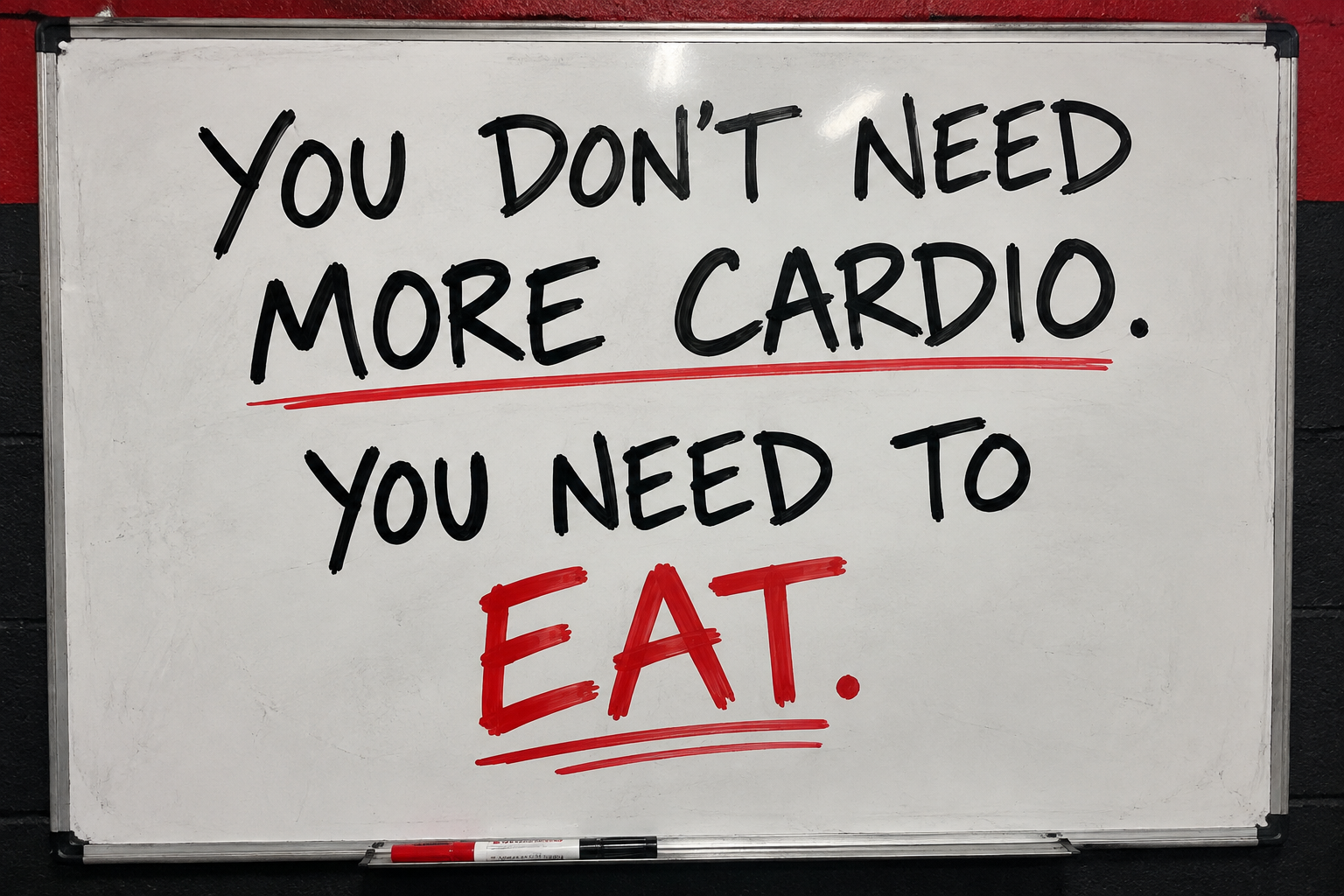
Every year we get people walking through the door of Ground Zero wanting a transformation. Six weeks, a wedding, a reunion, a number on the scale they've been chasing for years. And almost every time, the plan they walk in with is the same one that hasn't worked before: more time in the gym, more cardio, fewer calories, grind harder. We get it. It feels productive. But it's not what actually changes your body. The real first step to a transformation that holds up over six weeks and beyond isn't about minutes on a treadmill or classes crammed into a week. It's about how you fuel yourself. The 1,200 calorie diet lied to you A lot of people have tried the classic ultra low calorie approach. And it does work, at first. You'll drop weight fast the first week or two. But what's actually leaving your body isn't fat, it's inflammation and water weight, the first stuff to go no matter what you do. The problem is that story stops there. When you don't feed your body enough while you're still training hard or living an active life, it doesn't just calmly burn fat. It holds onto fat and water instead, treating food as scarce, and starts pulling energy from muscle. This is well documented: even moderate, sustained calorie restriction consistently produces some loss of lean mass alongside fat loss, not just in extreme diets (Kistler et al., 2017; Weinheimer et al., 2010). Why the scale says one thing and the mirror says another Someone hits their goal weight but doesn't look the way they pictured, doesn't feel strong, looks softer than the number suggests. That's muscle loss showing up, usually because protein wasn't where it needed to be. Research consistently shows low protein intake during a deficit is tied to greater muscle loss, while higher intake helps protect it (Longland et al., 2016; ISSN Position Stand, 2017). Muscle keeps you strong and keeps your metabolism working for you. Losing it isn't a side effect to ignore, it's the story going sideways. So what actually works Turning your body into something that burns fat efficiently isn't about starving it. It's fueling it enough to do its job: Enough protein to protect and build muscle, generally in the range of 1.2 to 2.0 grams per kilogram of bodyweight for active people (ISSN Position Stand, 2017) Enough carbs to support training and daily life, not just survive a workout A calorie level that creates change without triggering muscle loss Before we talk programming or training days, we talk about eating. None of the work in here matters if your body doesn't have what it needs to use it. Six weeks is enough time to change how you look and feel, but only if the fuel is right. That's the Ground Zero approach. Fuel first. Everything else builds from there.